%20Logo%20(1)(1)-1.png?width=750&height=152&name=EnterOne%20(a%20Trainocate%20company)%20Logo%20(1)(1)-1.png)

.png?height=200&name=EnterOne%20Blog%20Post%20Featured%20Images%20(1).png)
The pace of change in today's workplace is accelerating. From AI and automation to cloud...
Technology is evolving at an incredible pace, but behind every innovation is something even more important: people.
As organizations embrace AI, automation, and digital transformation, the conversation often centers on technology. Yet the real differentiator isn't the tools themselves; it's the people who know how to use them effectively. That's why today's workforce is shifting from a job-based mindset to a skills-based one, where adaptability, curiosity, and continuous learning are becoming the most valuable professional assets.
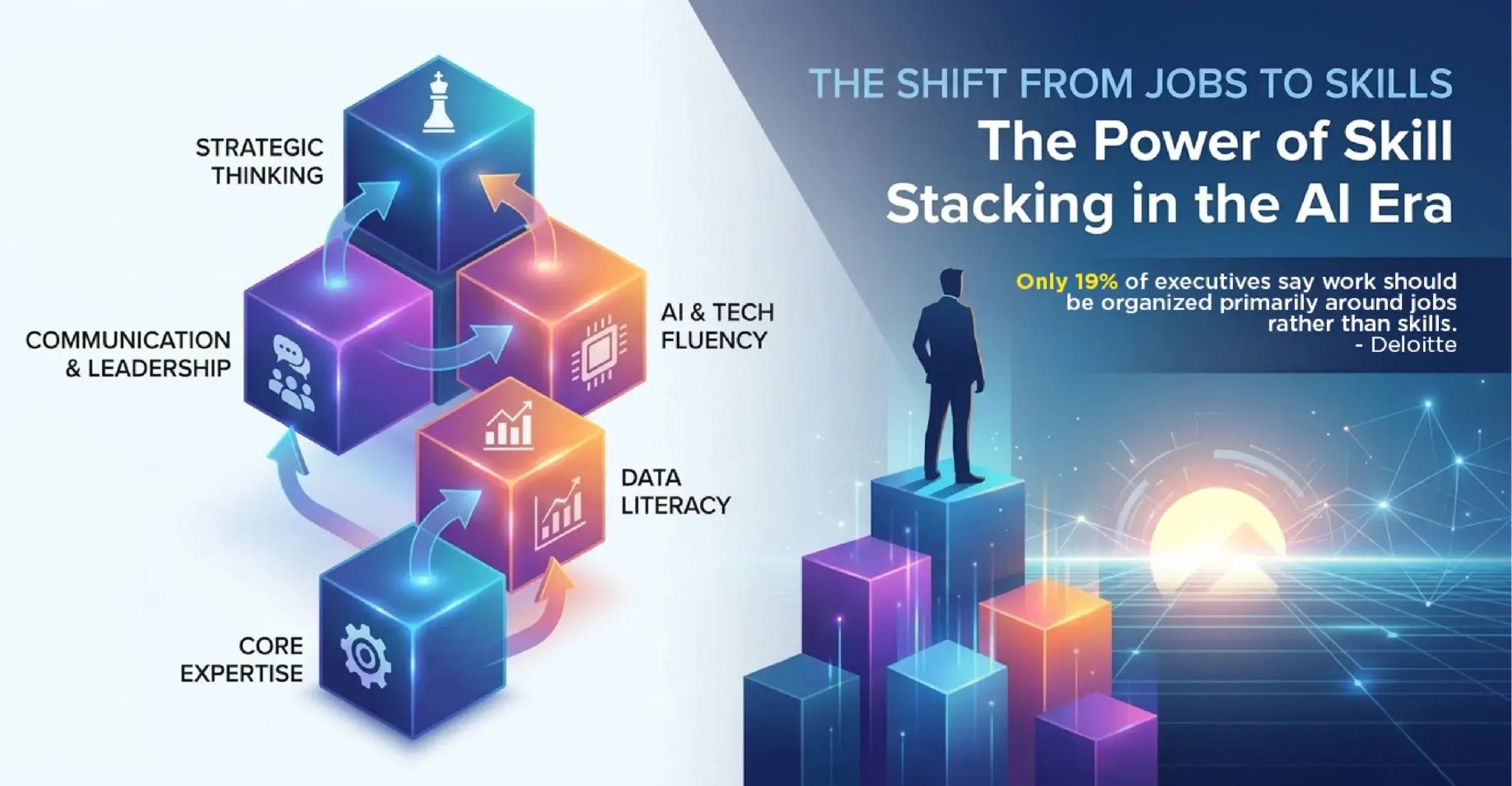
Research from Deloitte shows that only 19% of executives believe work should be organized primarily around jobs rather than skills. As the future of work continues to evolve, companies are moving toward a skills-first approach that values expertise, adaptability, and continuous learning over rigid role definitions.
Why Human Skills Matter More Than Ever
For decades, career growth was built around defined roles and responsibilities. Today, organizations are increasingly focused on the skills employees bring to the table rather than the titles on their business cards. This shift creates exciting opportunities for individuals to grow beyond traditional career paths and continually expand their value.
The challenge is that technology is advancing faster than many organizations can upskill their workforce. AI, cloud technologies, data analytics, and digital collaboration tools are changing how work gets done, creating a growing demand for professionals who are willing to learn, adapt, and evolve.
As Kavitha Rani from Trainocate notes in her April blog:
"While technology adoption continues to accelerate, workforce capabilities are not always keeping pace. Many organizations now face a widening skill gap, where emerging technologies outpace the ability of employees to adapt quickly enough. This means the ability to learn, unlearn, and relearn is becoming one of the most important skills professionals can develop
In the Asia Pacific region, talent shortages remain intense in 2026, with 71% of employers reporting difficulty filling roles. Emerging capabilities such as AI model development and AI literacy have overtaken traditional IT skills as the hardest to find, underscoring the urgent need for targeted and continuous workforce development.
According to Amazon Web Services research, advanced digital capabilities such as cloud architecture and software development have the potential to add an estimated $6.3 trillion to the global economy annually, driven by higher productivity and improved worker incomes."
What does this mean for today's workforce? Simply put, the skills that helped people succeed yesterday may not be enough to help them succeed tomorrow. As AI and other emerging technologies become embedded in everyday business operations, employees who continuously develop new skills will be better positioned to take advantage of new opportunities, contribute more strategically, and remain competitive in a changing job market.
For organizations, addressing the skills gap is about more than filling open positions. It is about building a workforce that can adapt to rapid change, embrace innovation, and confidently leverage new technologies. Investing in training and upskilling helps businesses develop talent from within, while empowering employees to take ownership of their professional growth.
In an economy increasingly driven by skills rather than job titles, continuous learning is no longer optional. It is a critical investment in both individual career success and long-term organizational resilience. The companies and professionals that prioritize learning today will be the ones best prepared to thrive in the future.
The Power of Learning, Unlearning, and Relearning
Success in the AI era isn't about knowing everything; it's about being willing to continually learn.
Sometimes that means learning a new skill. Other times it means unlearning outdated processes or assumptions. Most importantly, it means relearning as technologies and best practices continue to evolve.
Professionals who embrace this mindset are better equipped to navigate change, take on new responsibilities, and uncover new career opportunities. Rather than viewing AI as a threat, they see it as a tool that can enhance productivity, creativity, and decision-making.
Upskilling Creates Opportunity
Training is no longer just a professional development benefit; it's a career strategy.
By investing in upskilling, employees gain the confidence and capabilities needed to work alongside emerging technologies. Whether it's understanding AI fundamentals, strengthening data literacy, improving cybersecurity awareness, or developing cloud expertise, continuous learning helps individuals remain relevant in a rapidly changing workplace.
For organizations, the benefits are equally significant. Teams that prioritize learning are more agile, innovative, and prepared to meet evolving business needs. A culture of continuous development helps close skills gaps while empowering people to do their best work.
Building a Future-Ready Workforce
At EnterOne, we believe technology transformation starts with people transformation. The organizations that will thrive in the years ahead are those that create opportunities for employees to grow, adapt, and expand their skills.
AI may be reshaping the future of work, but human potential remains at the center of it. By embracing a mindset of continuous learning, unlearning, and relearning, individuals can build resilient careers and organizations can build workforces ready for whatever comes next.
The future belongs to those who never stop learning.